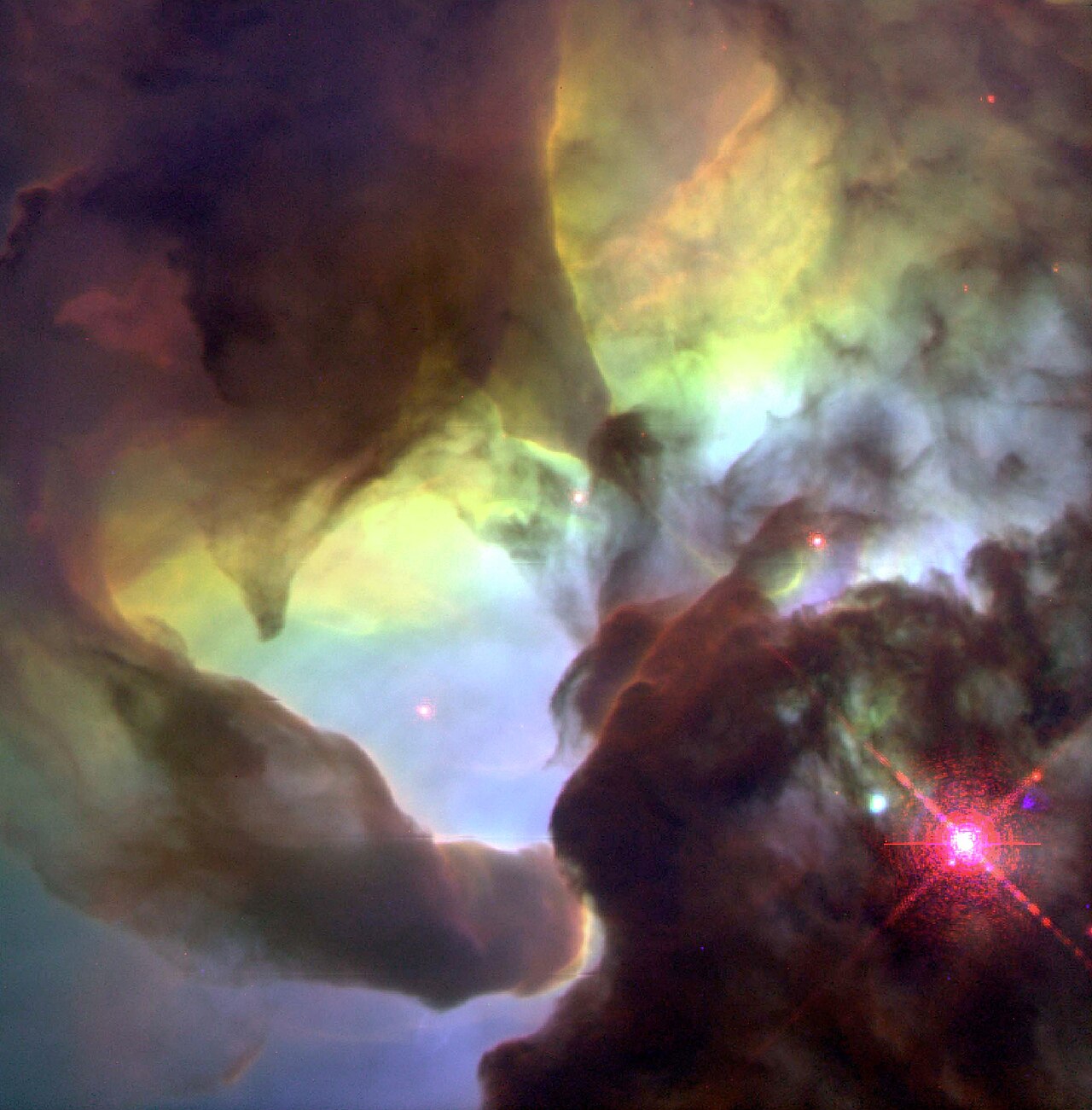
July is the month smart telescopes were built for. The galactic core is above the horizon from dusk until dawn, the summer emission nebulae are at their highest, and every one of them responds beautifully to the dual-band filters built into (or available for) the Seestar and Dwarf lines.
New Moon lands mid-month, giving you roughly ten dark evenings. Warm nights, short setup, big targets. Here's the plan.
The headliner: Lagoon Nebula (M8)
If you image one thing in July, make it the Lagoon. It's bright enough to show structure in a 10-minute stack and rich enough to reward two hours.
| Setting | Seestar S50 | Dwarf 3 |
|---|---|---|
| Filter | LP (dual-band) | Duo-band |
| Exposure | 10s subs | 15s subs |
| Integration | 60–120 min | 60–120 min |
| Framing | Fits FOV | Tele lens, centered |
The Lagoon sits low in the southern sky from mid-northern latitudes, so shoot it when it crosses the meridian — roughly 11 PM to 1 AM local time early in the month. Every minute it spends above 25° altitude is worth two spent below it.
The two-for-one: Trifid Nebula (M20)
The Trifid sits less than two degrees north of the Lagoon. On the Seestar S30 and Dwarf 3's wider framing you can catch both in a single mosaic panel — one of the best two-target frames in the entire sky. As a standalone target it wants more integration time than the Lagoon; give it 90+ minutes to bring out the blue reflection lobe next to the pink emission region.
The reliable ones
Eagle Nebula (M16). Home of the Pillars of Creation. Your smart scope won't resolve the pillars like Hubble — but a 90-minute dual-band stack clearly shows the dark columns against the glowing hydrogen. This is the July target that most impresses people who've seen the famous photo.
Swan Nebula (M17). Brighter surface than the Eagle and just a couple of degrees south of it. A great "second target" for the same session — slew over after your Eagle stack finishes.
Dumbbell Nebula (M27). When the core region drops low after 2 AM, the Dumbbell is high overhead in Vulpecula. It's small but bright, one of the few planetary nebulae that looks substantial on a smart scope. 45–60 minutes does it.
Don't ignore the Moon week
Around the full Moon (July 29 this month), deep-sky contrast dies — so shoot the Moon itself. Both Seestar and Dwarf have dedicated lunar modes. The terminator (the day/night line) is where the detail lives; full Moon night itself is actually the worst lunar night, so aim for a few days either side.
Quick FAQ
What's the best time to image in July 2026? The new Moon window runs roughly July 10–20. Core targets (M8, M20, M16, M17) are best 10 PM–2 AM; M27 and the Ring Nebula take over after that.
Do I need the dual-band filter for these? For the emission nebulae — yes, it's the difference between a washed-out smudge and actual structure, especially with any light pollution. The Pleiades and galaxies, by contrast, want it off.
How late is too late to start? Smart scopes make no-commitment astronomy possible. Even a 40-minute Lagoon session starting at midnight beats not shooting at all. Set it running, go inside, check the stack from the couch.
Next month: the core starts sinking, but Cygnus takes over — the North America Nebula is an August mosaic monster. The August plan publishes on the 1st.