OBSERVATORY LOG DARK-SKY MODE: ON SMARTSCOPETONIGHT.COM

Target Library

Objects worth your photons

One page per target: when it's up, how long to integrate, which filter to use, and what to expect from each smart scope. The library grows every week.
A close-up Hubble Space Telescope mosaic of the Veil Nebula supernova remnant showing filamentary ribbons of ionized gas in oxygen-blue and hydrogen-red

Target · Supernova Remnant

Veil Nebula: Smart Telescope Settings for the Cygnus Loop

Veil Nebula settings for smart telescopes: mosaic strategy, dual-band filter rules, and per-scope integration times for NGC 6960 and the Eastern Veil.

The Triangulum Galaxy (M33), a face-on spiral, imaged by the Hubble Space Telescope

Target · Galaxy

Triangulum Galaxy (M33): The Hardest Messier Galaxy

M33 is bright on paper and brutal on sensors. Here's how to frame, expose, filter, and integrate the low-surface-brightness sister to Andromeda.

The Dumbbell Nebula (M27), a bipolar planetary nebula in Vulpecula, imaged by the Hubble Space Telescope

Target · Planetary Nebula

Dumbbell Nebula (M27): Settings and Expectations

M27 is bright, big, and beginner-friendly — but easy to over-expose. Filters, sub lengths, and integration floors for the Dumbbell on every smart telescope.

The Whirlpool Galaxy (M51), a face-on spiral, imaged by the Hubble Space Telescope

Target · Galaxy

Whirlpool Galaxy (M51): Smart Telescope Settings Guide

M51 fits in a single smart telescope frame — unlike M31. Here's how to expose, filter, and integrate for a face-on spiral that actually shows arms.

The Pleiades open star cluster (M45), a color composite from the Palomar Observatory Sky Survey overlaid with the Hubble Fine Guidance Sensors' field of view

Target · Open Cluster / Reflection Nebula

Pleiades (M45): Smart Telescope Settings Without Blown Stars

M45 is bright, blue, and easy to overexpose. How to shoot the Pleiades on every smart telescope — the filter is off, and short subs are the whole game.

The Orion Bar, a bright ridge of ionised gas within the Orion Nebula (M42), imaged by NASA's James Webb Space Telescope in near-infrared

Target · Emission Nebula

Orion Nebula (M42): Every Smart Telescope's Best Target

M42 is bright enough to see naked-eye and easy to blow out in a live stack. How to frame, filter, and expose the Orion Nebula on every smart scope.

The Ring Nebula (M57) in infrared, imaged by NASA's Spitzer Space Telescope

Target · Planetary Nebula

Ring Nebula (M57): Small Target, Big Payoff

M57 is barely 1.5 arcminutes across but bright enough for any smart telescope. How to frame, filter, and expose the summer sky's easiest planetary nebula.

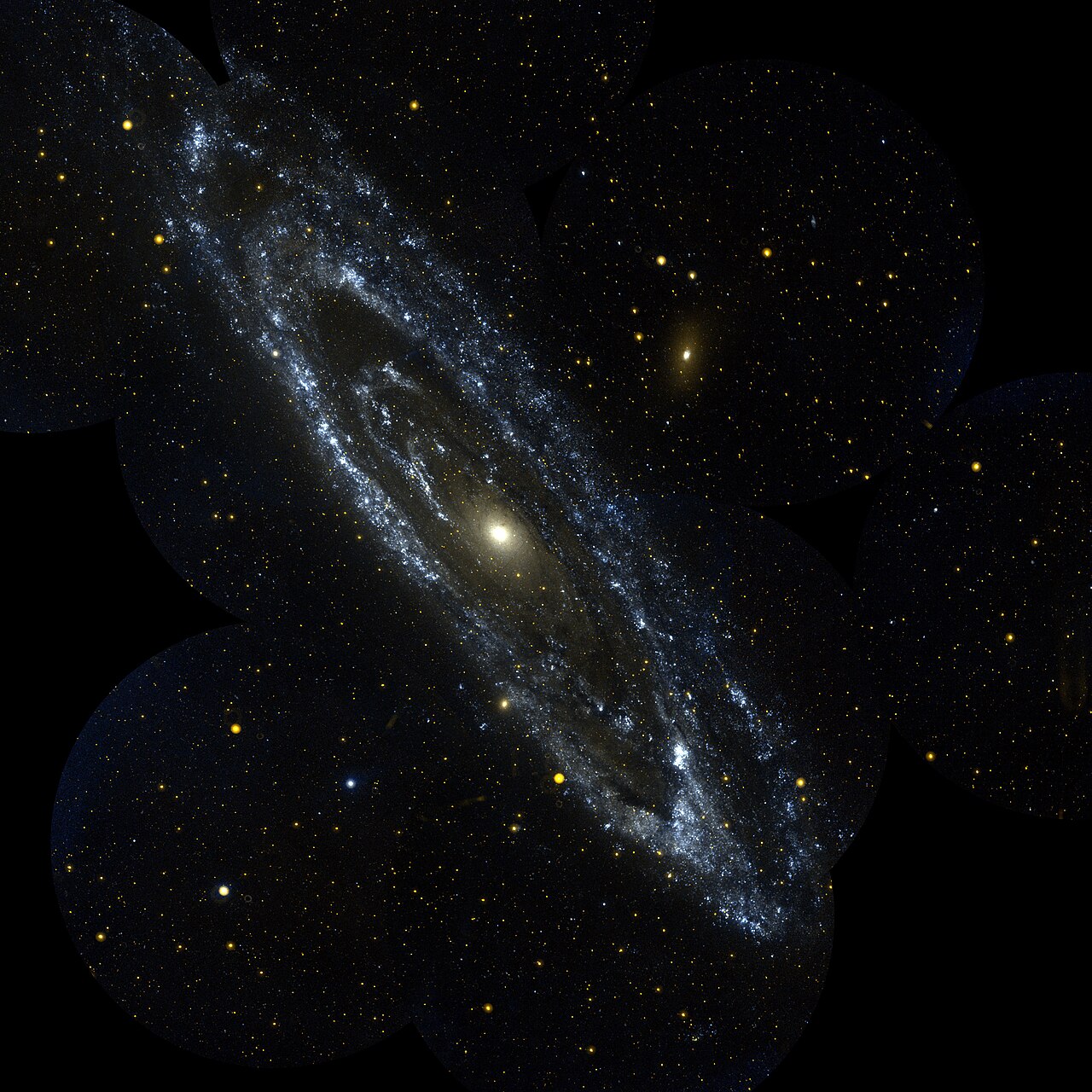
The Andromeda Galaxy (M31) in ultraviolet, imaged by NASA's GALEX observatory

Target · Galaxy

Andromeda Galaxy (M31): Smart Telescope Settings Guide

M31 is the most-attempted, most-botched smart telescope target. Here's how to frame it, expose it, and stack it, with settings for every scope.